- White light lamp
- Black body radiation
- InGaAs photodetector
- Si-PIN photodetector
- Photometer
- 1/r² inverse square law
- Spectral Characterisation
- Optical Bandpass Filter
PE-1200 Detection of Light
Topics:
Experimental Set-up of PE-1200 Detection of Light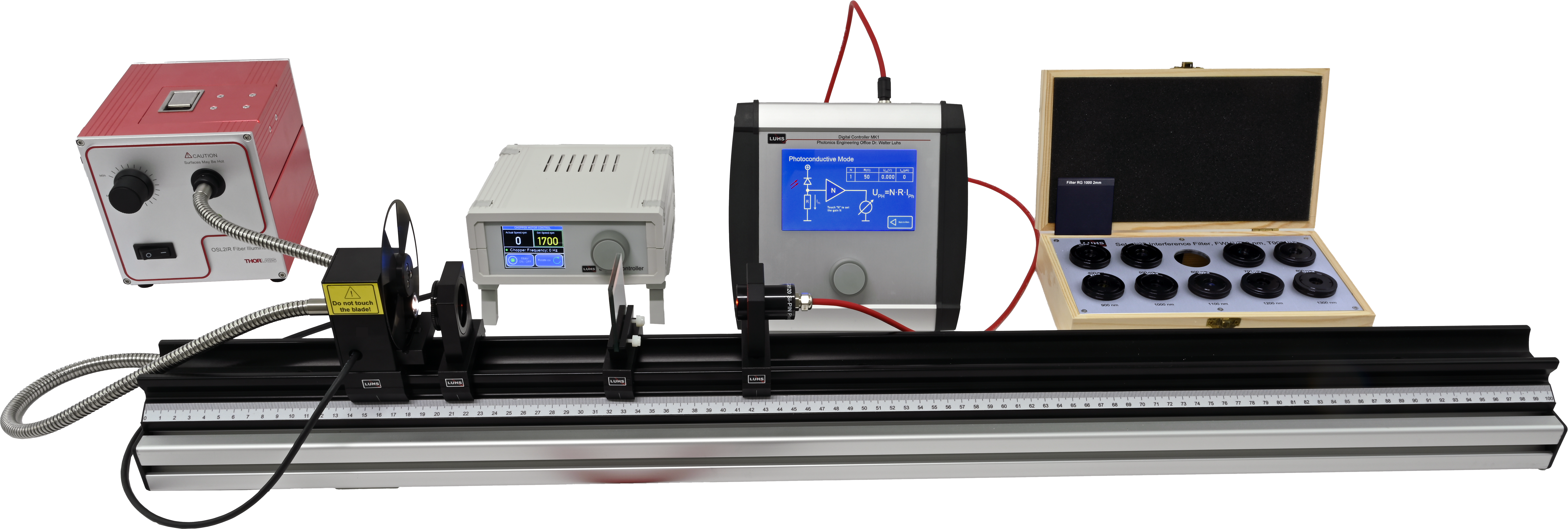
To obtain satisfactory results from your application other characteristics of the photodetector like sensitivity and time response should be taken into consideration. The ideal choice is a wavelength - independent detector which can detect very low as well as very high intensities with a very short response time, unfortunately this detector does not yet exist.
Detection of light means converting photons to electrical signals that can be amplified and displayed, in other words, the photon detector can be considered as photon to electron transducer. Due to the manifold of the interaction with light and matter a number of different types of detectors are existing. Within this experimental set-up different photodetectors based on semi conduction and thermoelectric effects are investigated as these types are the most important ones used in industrial applications.
For the characterization of the spectral sensitivity a combination of a white light lamp and 10 interference filter with a resolution of 10 nm and a range from 400 nm to 1300 nm is used. By means of a light chopper the time response of each detector can be measured. Especially for the semiconductor photo detector the influence of the outer electrical circuit on the response time and sensitivity will be determined.
Since the set-up is provided with a tunable light source also other specimen having spectral characteristics like optical filter or mirror can be investigated also within this set-up. Before we re going to detect light the following chapters are giving a comprehensive overview of the properties and generation of light. After that, semiconductor photodiodes will be discussed and applied for the detection of light
Experimental Set-up of PE-1200 Detection of Light

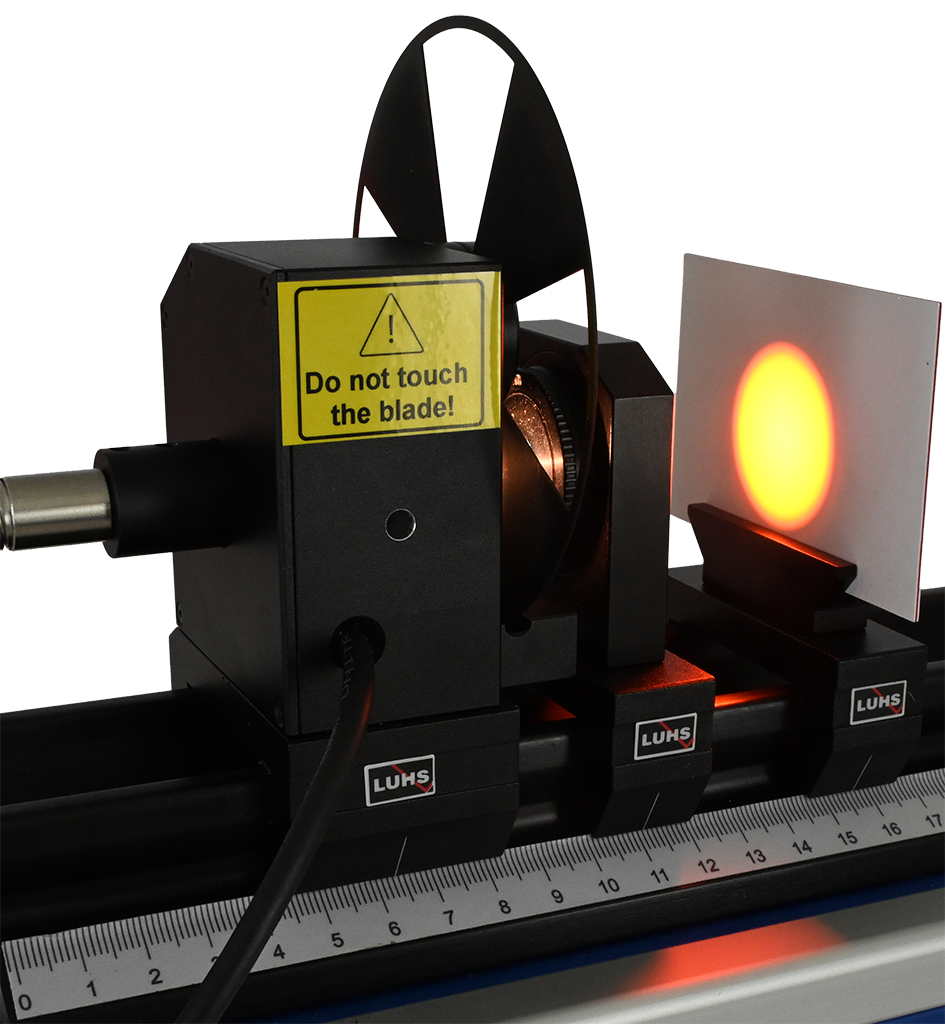
Although the setup is very simple, it allows for a wide range of interesting measurements and observations. The heart of the setup is the tungsten white-light lamp. Its light, with a power of 150 W and a wavelength range of 300–1400 nm, is delivered to the experiment via a fiber bundle. A focusing lens is attached to the end of the fiber bundle, which focuses the emerging light at a distance of 50 mm.
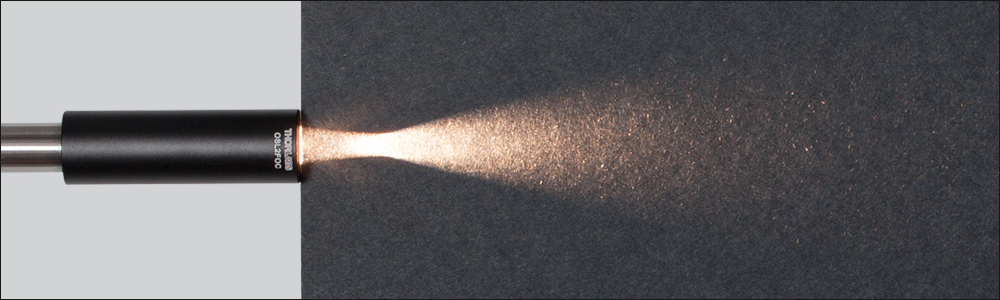
Focused light rays
The fiber bundle is inserted into the light chopper using the focusing optics and secured with the knurled screw.Once you have familiarized yourself with the control units, you can begin your first experiment. For this, you only need one of the two photodetectors. The light intensity is measured at various positions to verify the 1/r² inverse-square law.
The 10 narrowband (10 nm) interference filters can be used to generate specific wavelengths. The wavelength range extends from 400 to 1300 nm in 100 nm increments. Since the spectral intensity distribution of the white-light lamp is known, optical components can now be characterized in terms of their spectral transmission or sensitivity.
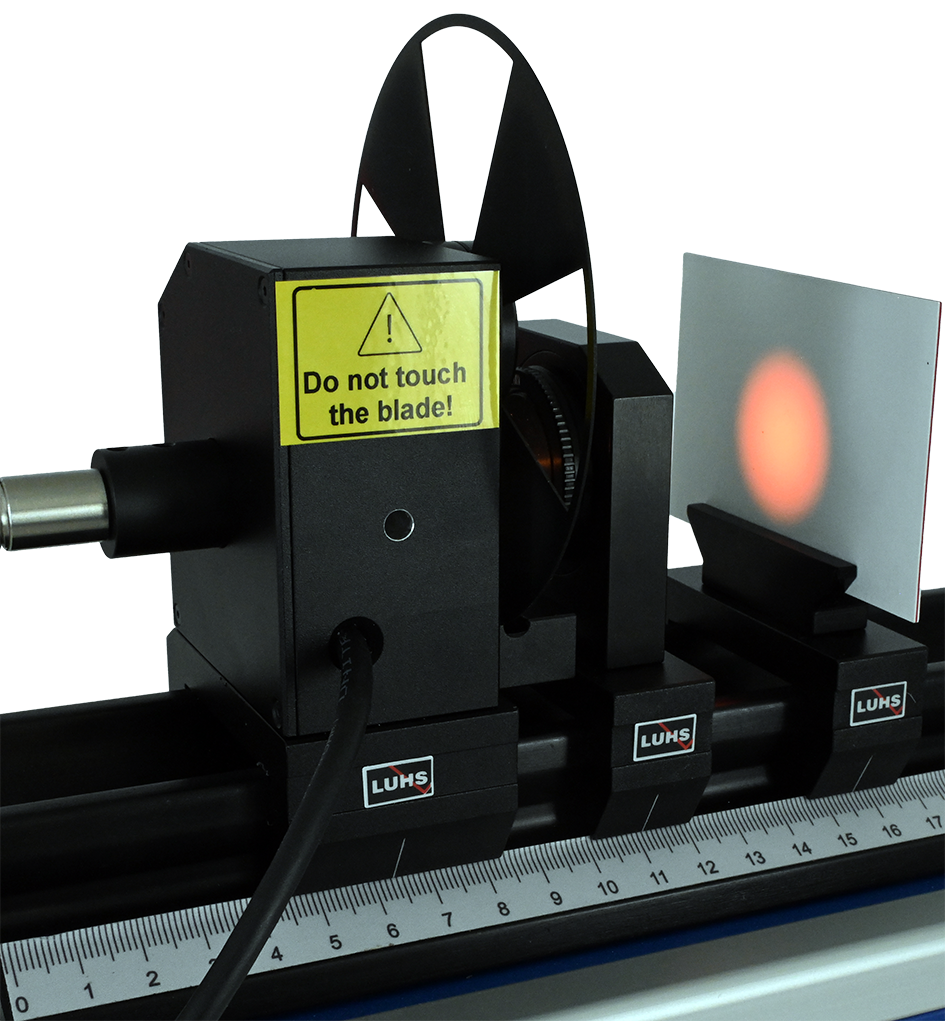
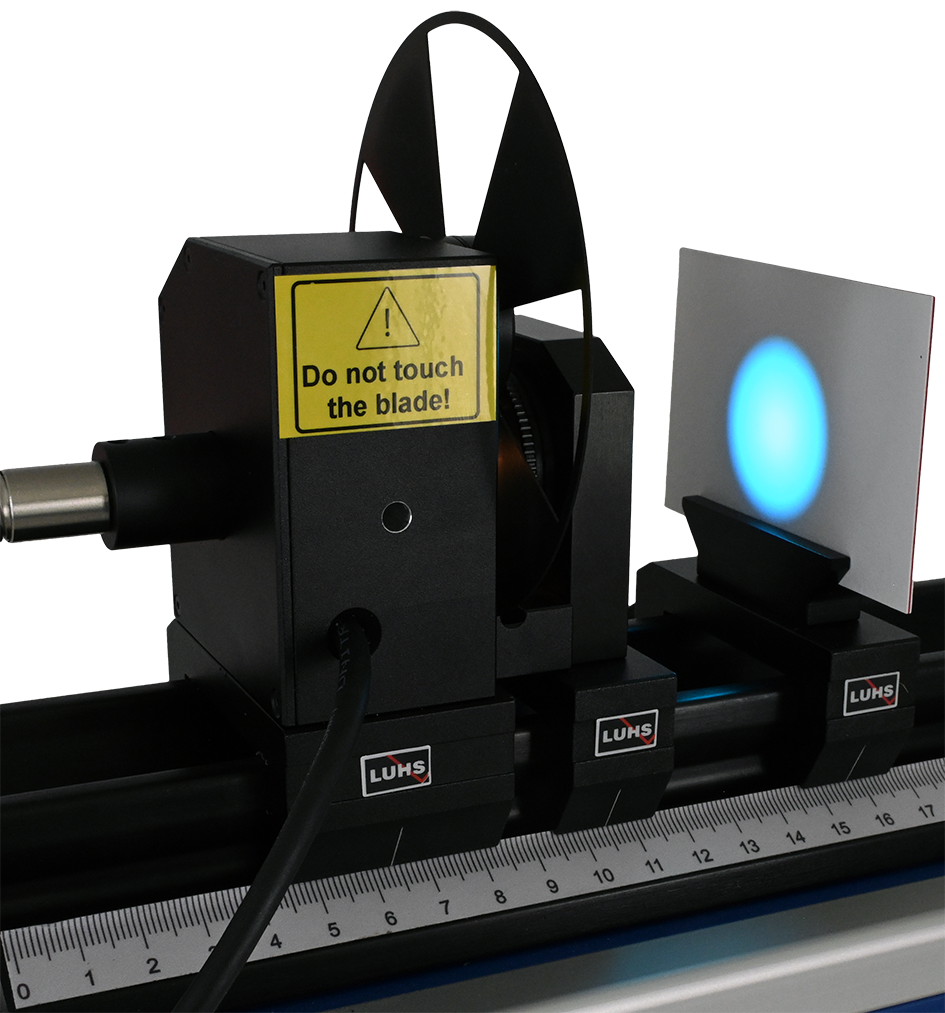
Examples of some interference filters in the visible spectrum
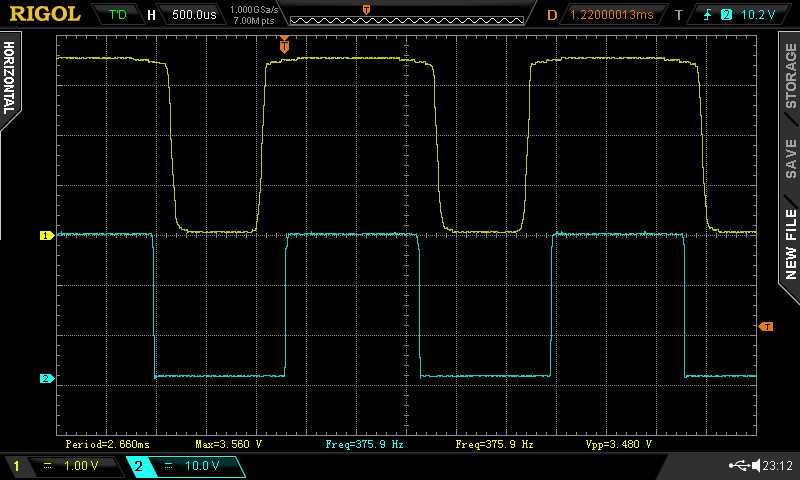
With the photodetector connection box, the connected photodiode can be operated in either photoconductive or transimpedance mode. In photoconductive mode, the shunt resistance can be varied from 10 Ω to 50 kΩ. In transimpedance mode, the feedback resistance can be set from 1 kΩ to 10 MΩ. An oscilloscope is used to measure the time responses of the photodiodes. The speed of the light chopper can be adjusted using the chopper controller, and the effect on the photodetectors can also be determined.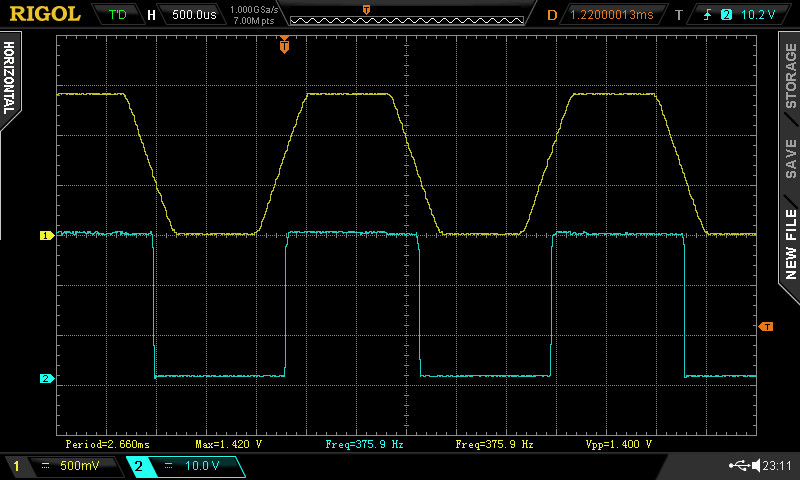 Shunt resistor 1k
 Shunt resistor 20k